
SPACE-NEST: A pioneering NEB initiative to revitalise and transform Europe’s rural territories
Rural depopulation, the abandonment of local assets and the lack of economic opportunities remain some of the most pressing challenges facing Europe’s rural territories. In this context, SPACE-NEST has emerged as an innovative initiative that brings together the values of the New European Bauhaus (NEB) and the social economy to regenerate abandoned spaces and turn them into drivers of sustainable, inclusive and culturally vibrant activity.
Led by Action Against Hunger, with the participation of the European Network of Innovation for Inclusion and local authorities, the project operates in Spain, Italy and Slovenia, promoting co‑creation processes, international missions and action plans to revitalise rural areas through a NEB‑inspired approach.
A NEB‑driven initiative for rural regeneration
SPACE NEST: Sustainable Path Advancing Community Empowerment – New European Bauhaus for Social Economy and Transformative Living is structured around the three core pillars of the NEB:
- Sustainability - green regeneration, circularity and responsible use of resources.
- Inclusion - community participation, social cohesion and opportunities for vulnerable groups.
- Beauty - enhancement of heritage, local identity and quality of the environment.
The project works closely with local communities to identify abandoned spaces, activate territorial networks, support social economy organisations and generate solutions that can be replicated across Europe.
A European network around rurality and NEB‑driven transformation
- 85 rural spaces have been mapped across the three participating countries, of which 27 have been pre‑selected for transformation and renewal. This work is documented in Deliverable 2.1 – Preliminary Overview of Existing Projects.
- More than 40 European good practices related to rural regeneration, social economy, cultural heritage and community activation have been identified. These are compiled in Deliverable 2.2 – Best Practices Booklet (available in English and Spanish).
- A network of over 160 territorial stakeholders has been mobilised, including public administrations, social organisations, social enterprises, universities and community groups. This network has been strengthened through Social Economy Missions, Sharing Days and territorial forums, documented in Deliverable 3.1 – Social Economy Missions Report. (AVAILABLE SOON)
Collaborative Action Plans have been developed for the Province of Málaga (Spain), Province of Bergamo (Italy) and the Municipality of Izola (Slovenia). Each plan includes proposals for sustainable regeneration, community activation and social‑economy‑based models. (AVAILABLE SOON)
- Action Plan for the Province of Málaga (Spain). Developed with the participation of Marcos Ros, Member of the European Parliament and key promoter of the NEB Facility, this plan outlines proposals for sustainable regeneration, community activation and social‑economy‑based models.
- Action Plan for the Province of Bergamo (Italy). A strategic roadmap focusing on rural revitalisation, cultural heritage enhancement and the development of social‑economy initiatives.
Action Plan for the Municipality of Izola (Slovenia). A comprehensive plan centred on sustainable territorial activation, community‑driven regeneration and NEB‑aligned transformation models.
SPACE- NEST at the New European Bauhaus Festival 2026
The project participated as a satellite event at the NEB Festival 2026, held on 10 June 2026, with the session: “Are we integrating the Inclusion Principle into the NEB? Matchmaking Event Exploring European Funding Opportunities.”
During the event, we brought together European initiatives that are redefining how inclusion and innovation can go hand in hand. Each of them presented a unique perspective:
🔹 SPACE‑NEST Project (Europe) – An emerging European initiative that brings together the three NEB pillars with a strong focus on the recovery and enhancement of abandoned rural spaces. ⬇️Download presentation.
💡 Speaker: Irene M., Project Coordinator at Acción contra el Hambre
🔹 BAUHAUS4EU European University Alliance (Europe) – A transnational alliance of universities promoting inclusive education, diversity and interdisciplinary collaboration inspired by NEB principles. ⬇️Download presentation.
💡Speaker: Ana Raquel Ribeiro, Diversity Officer, IPCB - Instituto Politécnico de Castelo Branco.
🔹 Les Halles de la Cartoucherie (France) – A 13,500 m² adaptive reuse of a former military site in Toulouse, structured as a cooperative (SCIC) and welcoming around 2.2 million visitors per year. ⬇️Download presentation.
💡Speaker: Muriel Le Vaillant, General Director.
🔹 LAB GENALGUACIL (Spain) – An open and collaborative space dedicated to regenerating rural life and exploring new ways of working, creating and thinking together. ⬇️Download presentation.
💡Speaker: Prof. Joe Lockwood FRSA, Co‑founder, Norges teknisk-naturvitenskapelige universitet (NTNU)
We also explored how current European funding opportunities are embedding NEB values — particularly inclusion — into innovation and transformation projects:
🔹 Carlos Toledo, NEB Horizon Europe National Contact Point at the Ministerio de Ciencia, Innovación y Universidades (@CDTI_innovacion), presented the #HorizonEurope opportunities that place a strong emphasis on the New European Bauhaus and inclusion, mapping the key calls and topics in these areas. ⬇️Download presentation.
🔹 Alicia García-Madrid Colado, Manager of European Programmes at Acción contra el Hambre, will present the work of the #EITCommunityNEB, highlightied how this community is fostering collaboration across sectors to bring NEB values to life. ⬇️Download presentation.
The event aimed to bring the European ecosystem closer to the NEB, showcase pioneering inclusion‑driven initiatives, and connect projects, organisations and funding opportunities. More than 70 participants from 16 different countries took part in the event, fostering a diverse and international exchange of ideas.
A European model for rural regeneration
SPACE-NEST demonstrates that the New European Bauhaus can serve as a powerful lever for rural transformation, capable of:
- reactivating abandoned spaces,
- fostering new green and social economies,
- strengthening cultural identity,
- attracting talent and entrepreneurship,
- and building more cohesive and resilient communities.
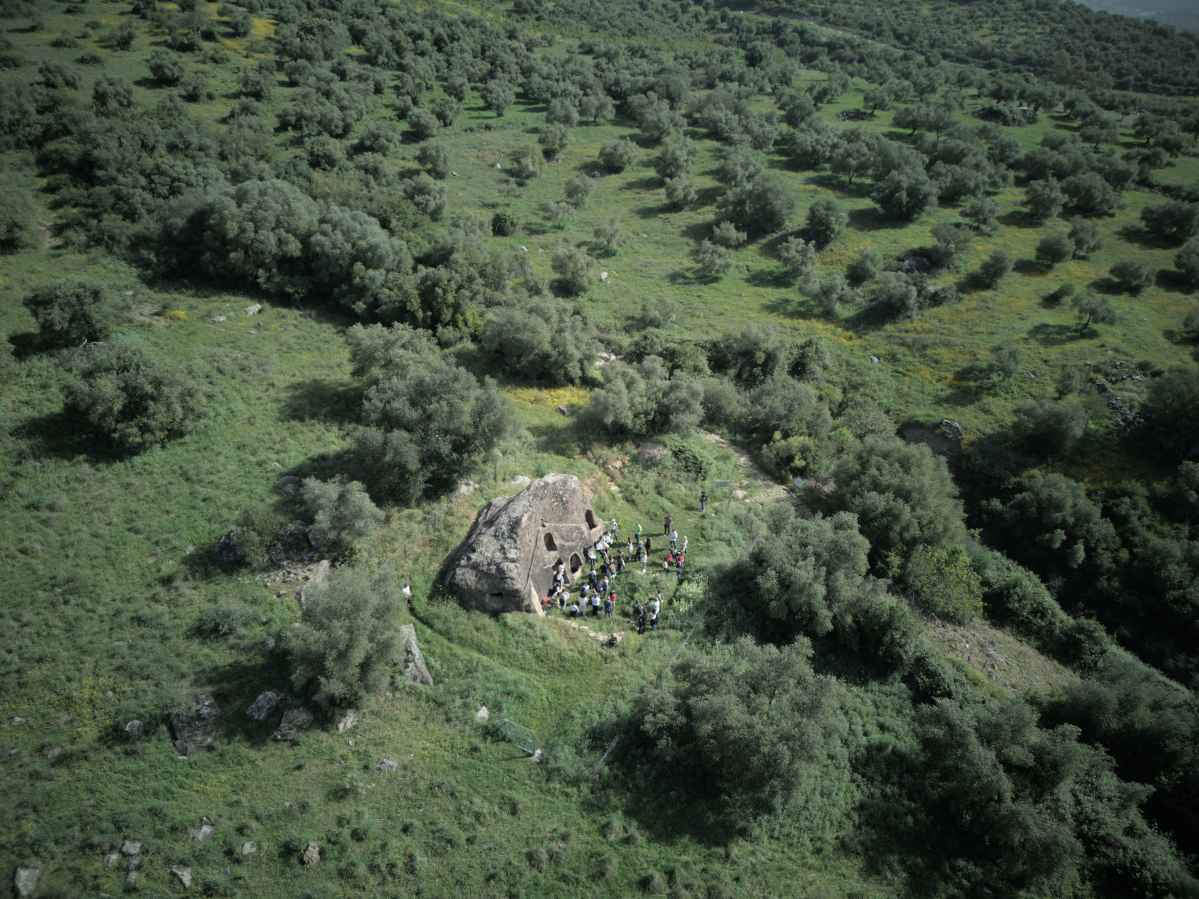
The project is consolidating itself as a European success story in rural regeneration through social innovation, sustainability and citizen participation.
Interested in learning more or exploring collaboration opportunities?
Contact us: [email protected]
Disclaimer: Co-funded by the European Union. Views and opinions expressed are however those of the authors only and do not necessarily reflect those of the European Union or the European Commission. Neither the European Union nor the European Innovation Council and SMEs Executive Agency (EISMEA) can be held responsible for them. Project no. 101169704 - SPACE-NEST.
