
Launch of the new Spanish Competence Centre for Social Innovation
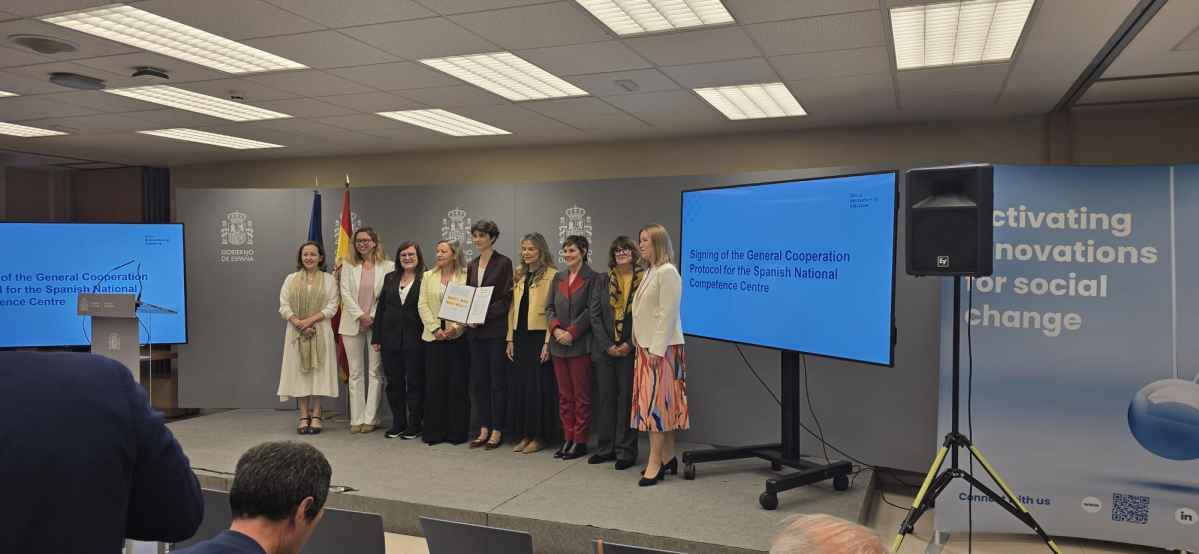
On 5 May, the European Network of Innovation for Inclusion attended the signing of the General Cooperation Protocol establishing Spain’s new National Competence Centre for Social Innovation (CECIS). The initiative brings together the Ministry of Social Rights, Consumer Affairs and Agenda 2030, the Ministry of Science, Innovation and Universities, the Ministry of Inclusion, Social Security and Migration, the Ministry of Labour and Social Economy, IMSERSO, the Spanish National Research Council (CSIC), the Centre for Technological Development and Innovation (CDTI) and the Agirre Lehendakaria Center for Social and Political Studies (Universidad del País Vasco).
CECIS will represent Spain’s first public infrastructure specifically dedicated to transforming social innovation into public policy, transferable knowledge, and a driver of systemic change. Its creation marks an important step towards strengthening institutional capacities to address complex social challenges through coordinated, evidence-based and mission-driven approaches.
The protocol was signed during the international event Social Innovation Portfolios in Practice: Building Advocacy for Systemic Change, organised by the Spanish State Secretariat for Social Rights and the European Commission. The event brought together National Competence Centres for Social Innovation from across Europe, alongside Spanish institutional stakeholders, to exchange experiences on how social innovation portfolios can support learning, experimentation, advocacy and policy transformation.
A key message emerging from the event was the need to move beyond isolated projects and towards portfolio-based approaches that enable continuous learning, coordination and long-term systemic impact. As highlighted throughout the discussions, persistent social challenges such as inclusion, poverty or homelessness require interconnected systems of experimentation, knowledge generation and policy change, rather than stand-alone initiatives.
In this context, the European Network of Innovation for Inclusion can contribute significant added value through its experience in scaling and transferring social innovations across different territories and policy contexts. The Network could also support the exchange of knowledge, methodologies and good practices among European actors, helping successful innovations achieve wider impact and sustainability.
Furthermore, the European Network of Innovation for Inclusion can help build stronger European partnerships, promote mutual learning, and foster a more integrated ecosystem for social innovation. In doing so, it can contribute to accelerating the adoption of innovative solutions and reinforcing Europe’s collective capacity to deliver inclusive and systemic social change.
"Social innovation is not an option. It is not a trend. It is a necessary condition for public systems to respond to the great challenges of our time."
— Rosa Martínez, Secretary of State for Social Rights (Spain)